
The Places We Never Dreamed Of
What a 1990s JET newsletter can teach us about expectations, community, and finding home far from the guidebooks
By Karl English
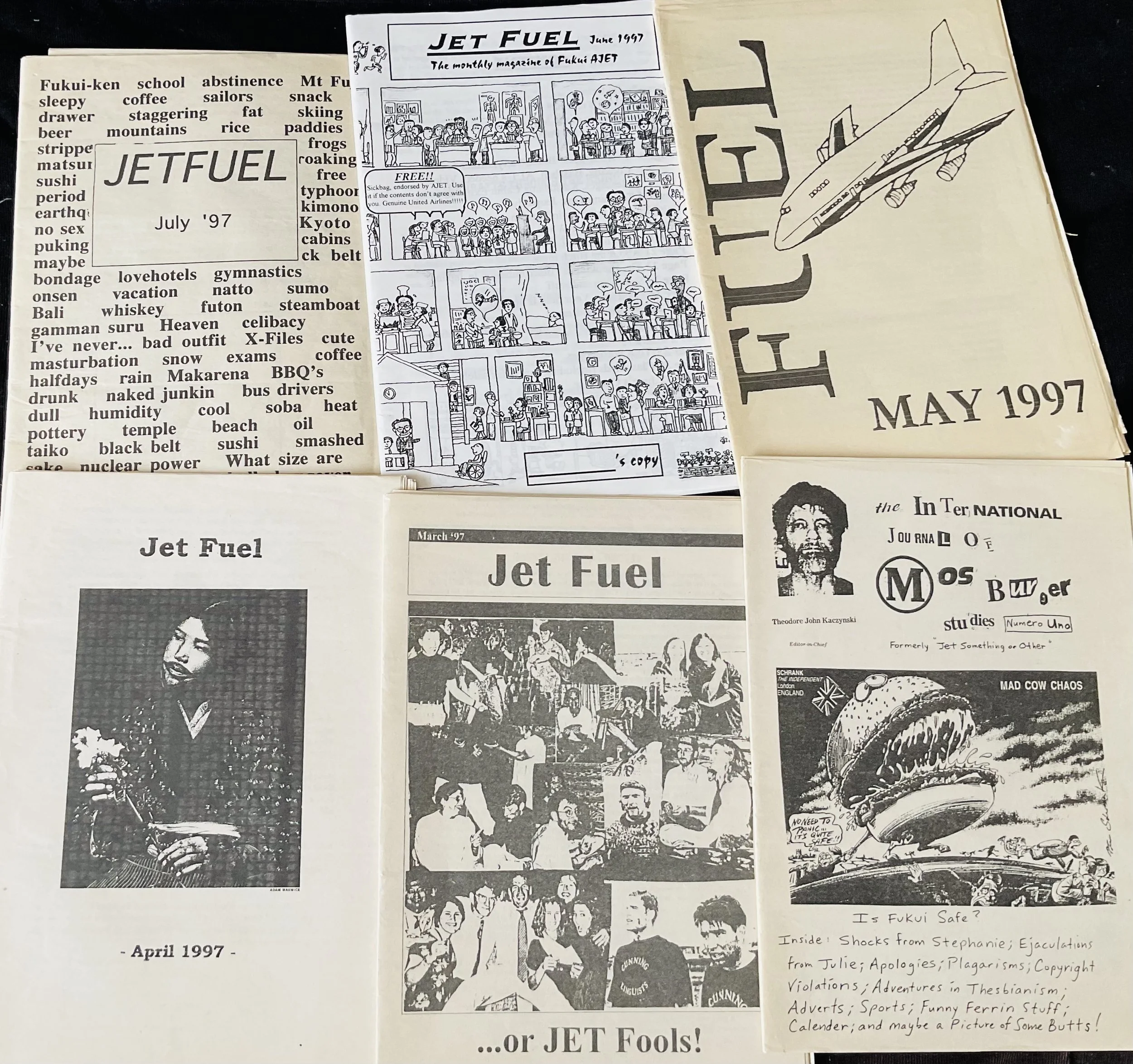
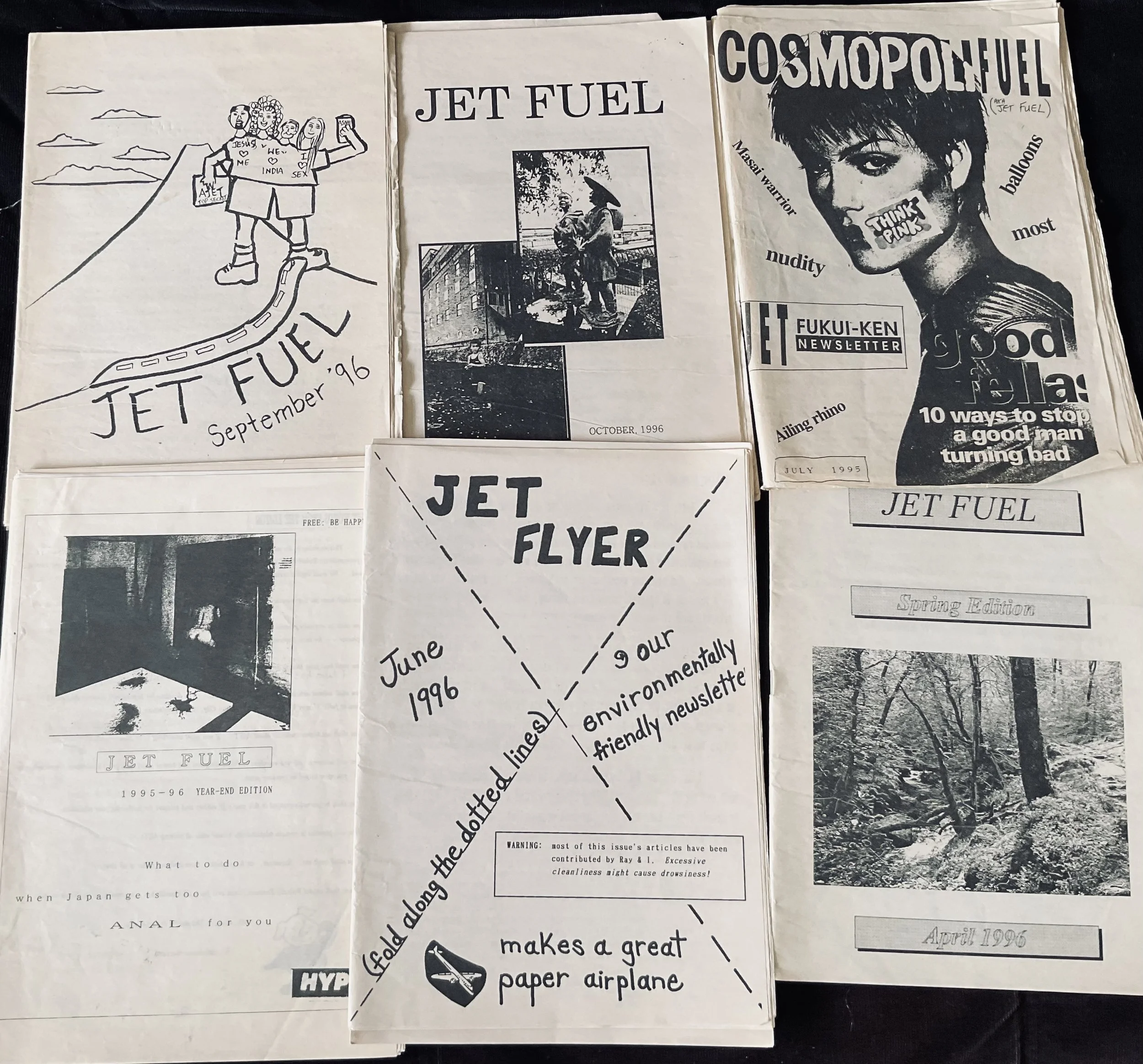
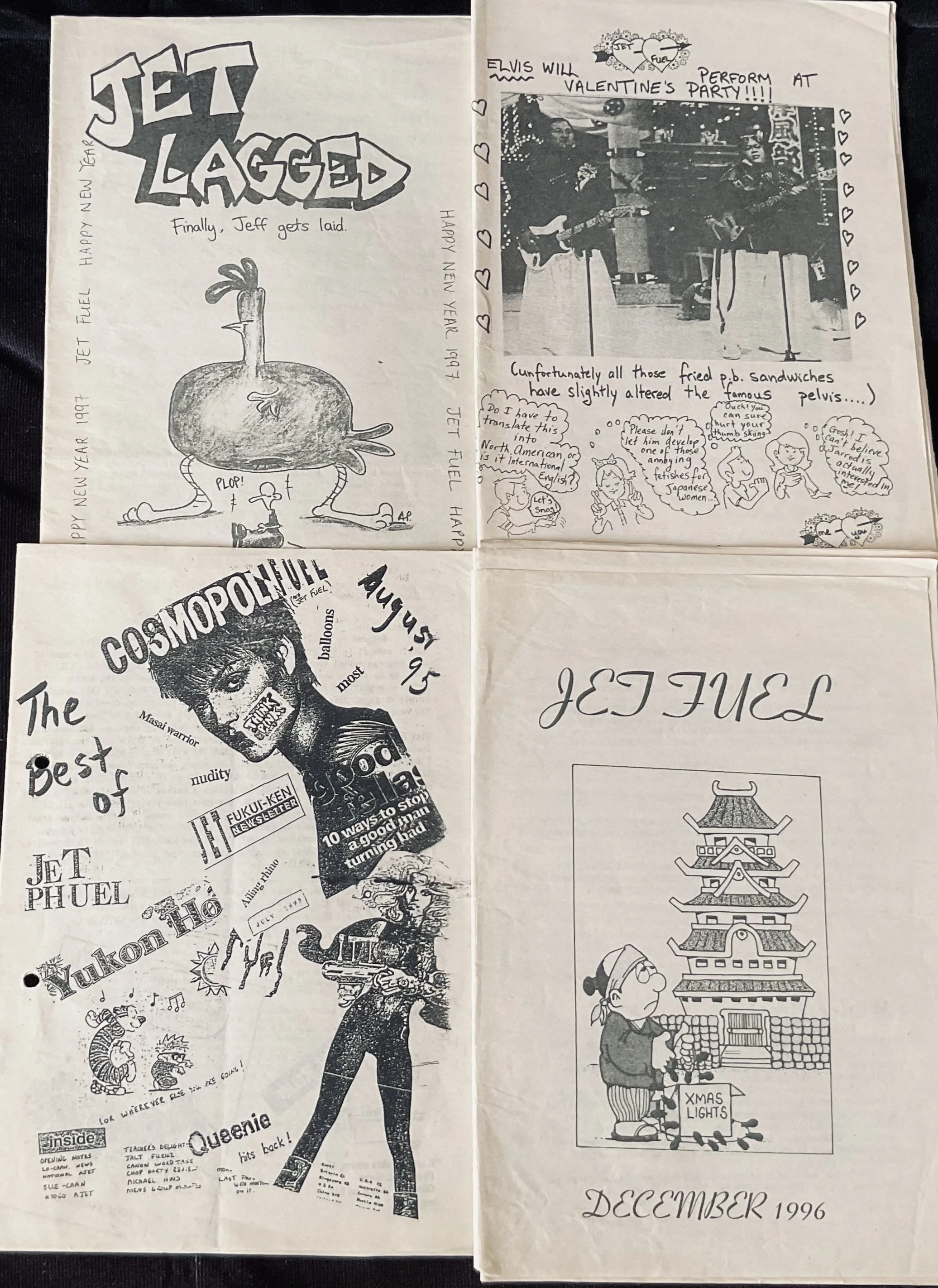
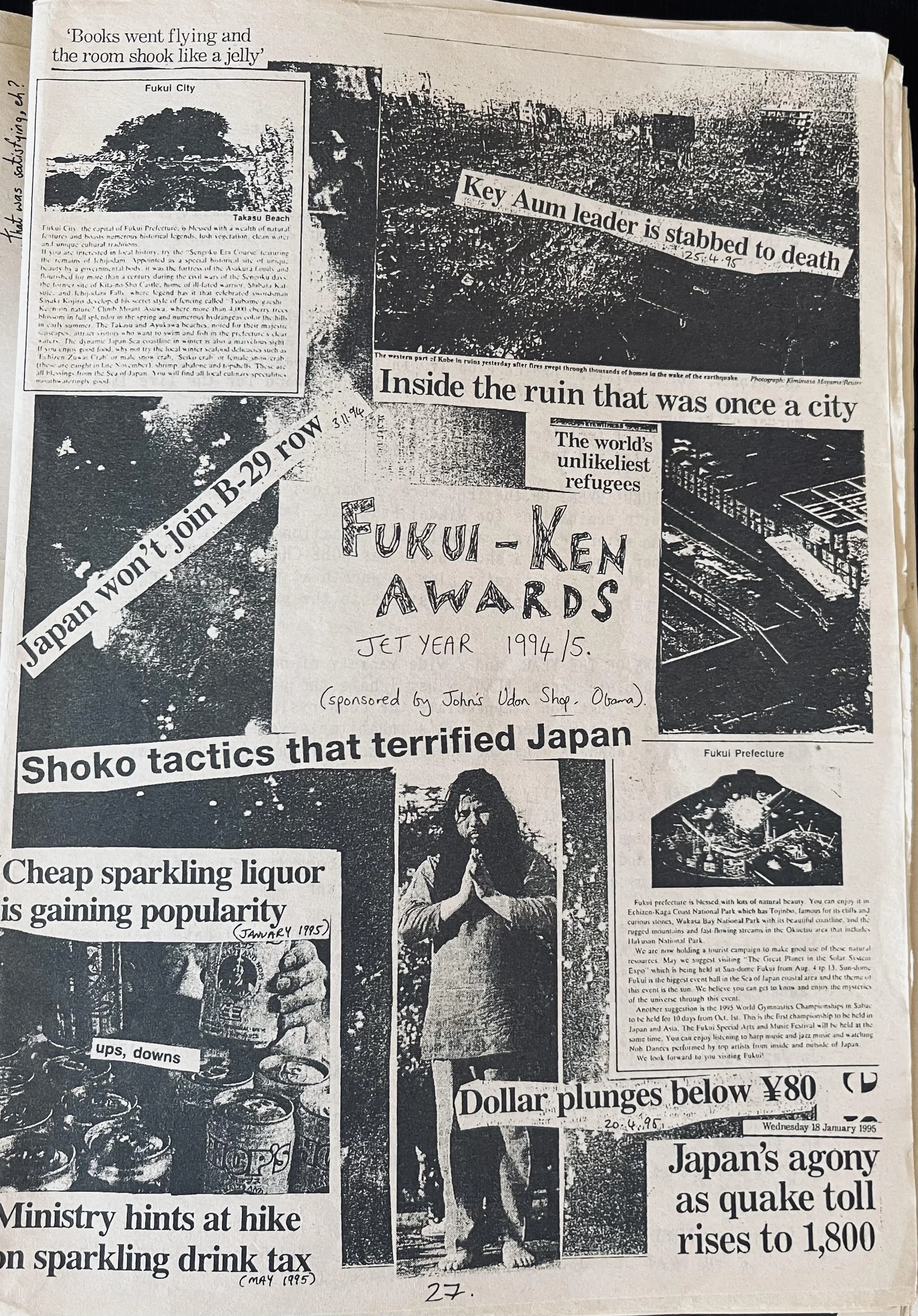
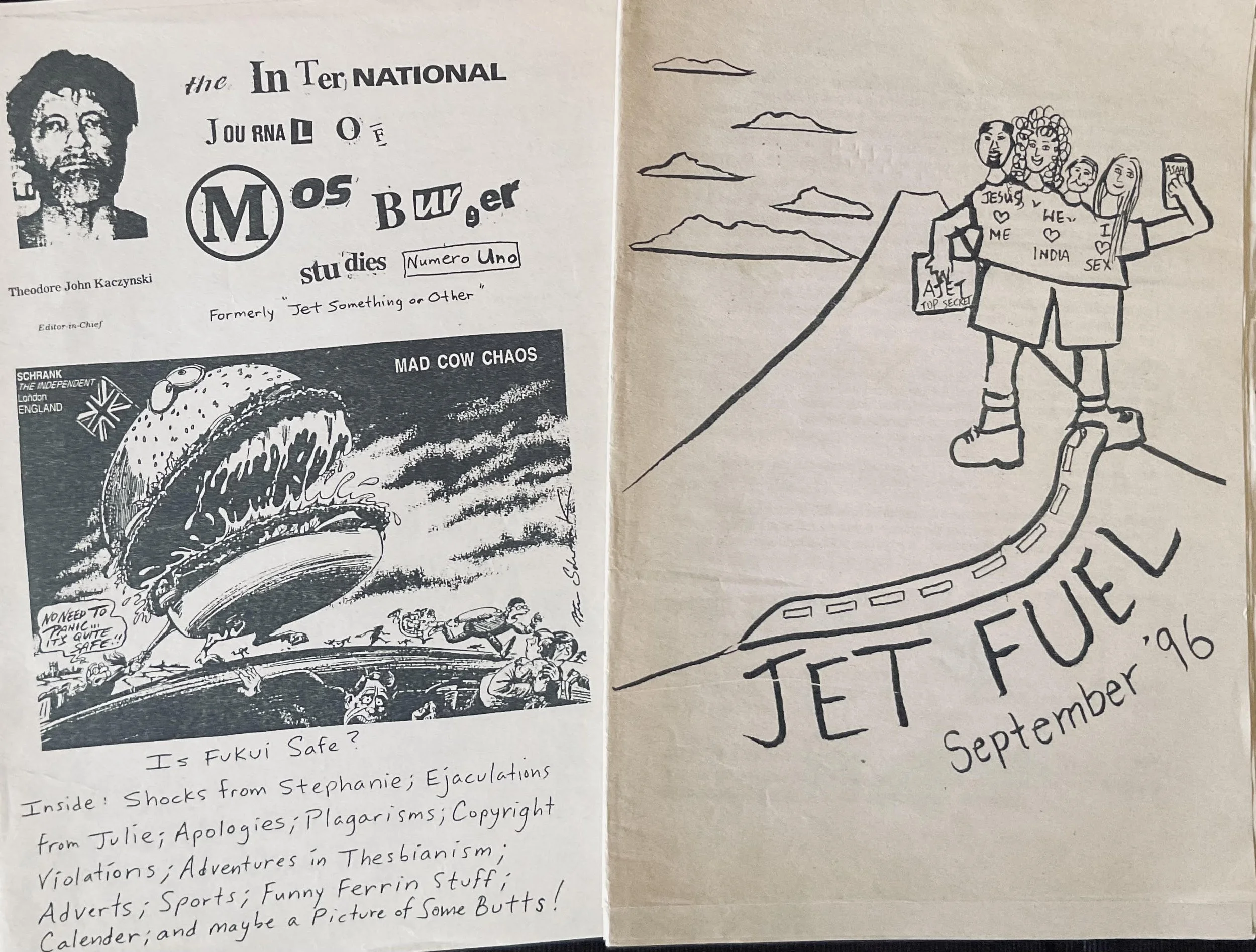
Before WhatsApp groups, Facebook, Zoom, or widespread internet access, JET participants in Japan built community through cut-and-pasted photocopied magazines sent by post. In Fukui, ours was called Jet Fuel.
I've been reading issues from 1995 to 1997, and they're a delightfully unexpected time capsule.
Among the highlights:
The eternal JET question – “Should I Renew?”
Debates over who owned the largest collection of Mr. Donut giveaways.
Headline news: the opening of Fukui Prefecture's first Subway.
Gentle mockery of foreign residents' growing obsession with the LL Bean catalogue.
Annual awards include “Dressed Like a Tramp: Services to Slovenliness, with Special Mention to the Outfit at Contract Signing”, “Physical Wreck of the Year” and “Most likely to suppress any memory of the JET Programme.”
A regular column called The Whining Gaijin.
A thoughtful essay on sexism in Japan titled The Pedagogy of the Oppressed.
One issue even introduces the World Wide Web as “a tremendous resource for finding a pen pal.”
At a recent JET Programme Pre-Departure Q&A Session, I spoke with a new JET heading to Kochi who had already had a Zoom call with her predecessor to learn about housing, schools, and life in her new community. The contrast made me smile.
Before I arrived in Fukui, my predecessor and I exchanged two letters. By the time I stepped out of my supervisor’s car in Mikuni, I had built up a picture of the place through a couple of envelopes rather than a video call. Today, incoming JETs can tour apartments virtually and meet colleagues in advance. In the mid-1990s, much of the adventure came from simply turning up and discovering things for yourself.
News travelled through phone calls, letters, and the Fukui JET fax tree, while the classifieds advertised floppy diskettes and a Mac LC575 running WordPerfect 3.0. It was only thirty years ago, but it feels archaeological.
What makes these newsletters so fascinating is not the major events, but the mundane details: Misdo collections, fast-food openings, catalogue shopping habits, inside jokes and shared stories. They show how communities are really built.
Reading Jet Fuel, it becomes clear how quickly these ordinary details transformed Fukui from a posting on a map into a place people genuinely cared about. A sandwich shop opening, a local band's performance, a beach clean-up, or a running joke about Mr. Donut giveaways all became part of a shared story.
The magazine chronicled “beerientering” events, local bands (who can forget the classic Watashi wa Pachinko ga Suki Desu?) and pub crawls in Katamachi. It published an essay written by three JETs bored out of their minds at the Renewers Conference, questioned why British men did not change their underpants regularly, and challenged readers to count the highest number of times a JLT fell asleep in a single class. The reported record was twenty-eight. Objectively, these were minor events. But they became important because they were our events.
Clippings from JET Fuel newsletter, 1997
Many years ago, on leaving Fukui, I wrote:
“When my grandchildren ask me what I did during my years in Mikuni, I don't want to cough, shift them onto my good knee, and tell them that I was Santa-san in four elementary schools!”
The line was partly in jest, but the sentiment still rings true. The lasting memories of JET are rarely the items in our job descriptions. They are the friendships, adventures, mishaps, and stories that gradually turn a temporary placement into a home.
That made me wonder whether JET participants in rural Japan were largely immune to what is sometimes called Paris Syndrome.
First described by Dr Hiroaki Ota in the 1980s, the idea describes visitors arriving in Paris with such elevated expectations that reality proves disappointing. For decades, Paris occupied a special place in the Japanese imagination: romance, fashion, elegance, and culture. For some travellers, the gap between expectation and reality proved difficult to reconcile.
There is also anecdotal evidence of a “Kyoto disappointment” effect, where an idealised vision collides with a modern city grappling with crowds, traffic and overtourism.
Whether these phenomena are entirely real or partly symbolic is almost beside the point. The underlying lesson is universal: the more elaborate our expectations, the more vulnerable we become to disappointment.
By that logic, JET participants assigned somewhere off the tourist trail, such as Fukui in the 1990s, may have enjoyed a distinct advantage.
Most of us could not have found Fukui on a map before arriving. Indeed, the 1995 edition of Lonely Planet Japan was not especially flattering:
“Fukui... is another prefectural capital with nothing to see... There is no reason to linger here.”
Yet Jet Fuel tells a very different story.
Clippings from JET Fuel newsletter, 1996
We were not comparing reality to a fantasy. Instead, we encountered Japan as it was and gradually built meaning through friendships, shared experiences, and endless banter. (Yes, Canadians really are different from Americans. Entire issues of Jet Fuel seemed devoted to proving it.)
As former Fukui JET and author of For Fukui's Sake: Two Years in Rural Japan, Sam Baldwin, puts it:
“The fact that Fukui was/is such a little-visited part of Japan is what made it such an enriching place to live. We experienced life in Japan as the Japanese live it, not a show for tourists.”
And this is not unique to Fukui. Similar stories could probably be heard from people placed in Akita, Shimane, Tottori, Kochi, Yamaguchi, or countless other parts of Japan that rarely featured in guidebooks.
Thirty years later, Jet Fuel reads like a snapshot of a community caught between analogue and digital, newcomers and veteran JETs, culture shock and belonging. More than that, it reminds us how meaning emerges from ordinary experiences shared with other people.
The older I get, the more I suspect that the places which matter most are not necessarily the ones we spend years dreaming about. They're the ones that surprise us.
And judging from the pages of Jet Fuel, few places surprised people more than Fukui.
